How Indoor Plants Improve Office Productivity & Employee Well-Being
Beyond looking good, office greenery has a measurable effect on how people feel and perform at work. Here's how — and why it only works if the plants stay healthy.
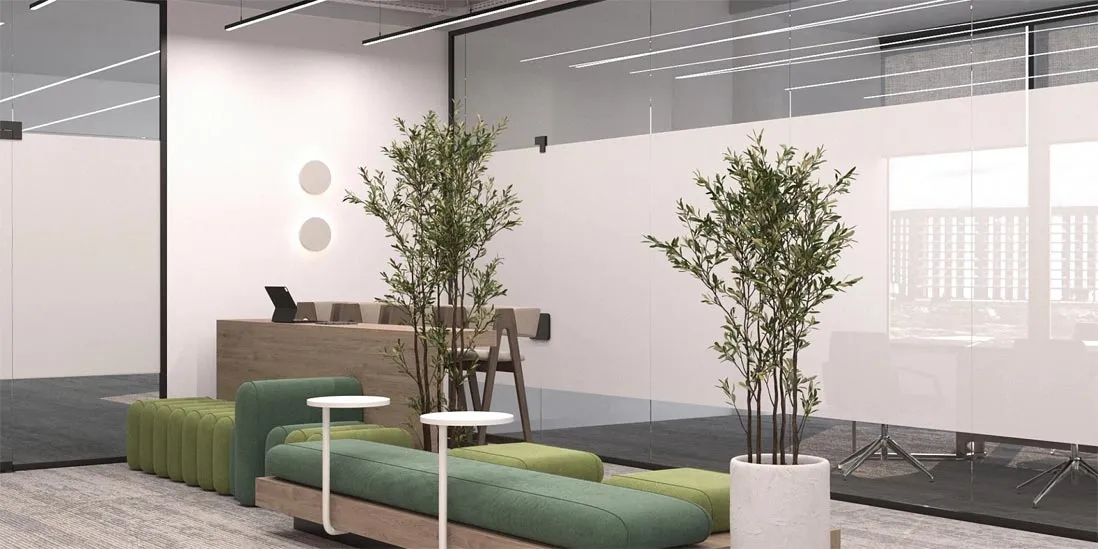
Most offices spend money on ergonomic chairs, good lighting, and comfortable break rooms — all in the name of employee well-being. But one of the simplest, most cost-effective upgrades is often overlooked: plants.
Workplace studies have repeatedly pointed to the same conclusion — greenery in the workplace isn't just decoration. It has a measurable effect on how people feel and perform at work.
1. Better Air Quality, Fewer Sick Days
Offices are closed environments, often with recycled air from AC systems. Plants like Snake Plant, Peace Lily, and Areca Palm help filter out common indoor toxins released by furniture, carpets, and electronics.
Cleaner air indoors is linked to fewer headaches and less fatigue during long work hours.
Offices that place a few of these plants near desks and AC vents, where toxin buildup tends to be highest, typically see the most noticeable difference in air freshness within the first few weeks.
2. Reduced Stress, Better Focus
There's a reason hospitals, therapy offices, and even airports are adding greenery — the presence of natural elements has a calming effect on the mind.
For employees staring at screens for eight hours a day, a bit of green in their line of sight can genuinely reduce visual and mental fatigue.
Even something as simple as a desk plant within eyeshot gives the eyes a brief natural focal point to rest on between screen sessions — a small habit that adds up over a full workday.
3. Higher Productivity
Multiple workplace studies have found that employees in offices with plants report higher concentration levels and complete tasks with fewer errors compared to plant-free environments.
It's a small design choice with an outsized impact on daily output.
Teams working in cabins or near meeting rooms with greenery often report feeling less mentally drained by the end of the day compared to fully enclosed, plant-free spaces.
4. A More Positive First Impression
Plants aren't just for employees — they shape how clients and visitors perceive your business. A reception area with well-maintained greenery signals that a company pays attention to detail.
It's a small thing that quietly builds trust with anyone walking through the door.
5. A Boost to Workplace Culture
Beyond the measurable benefits, plants simply make a space feel more human. Employees notice when a workplace feels cared for.
That translates into how they feel about coming to work each day.
The Catch: Plants Need to Actually Survive
The well-being benefits only apply if the plants stay healthy. A dying, yellowing plant in the corner of an office does the opposite of what it's meant to — it signals neglect rather than care.
This is where most offices struggle: someone waters occasionally, nobody prunes, and within a few months, the plants look worse than having no plants at all.
Which Plants Give the Best Well-Being Results
Not every plant contributes equally here. Snake Plant and Peace Lily are strong air-quality performers, Pothos and Spider Plant are easiest to keep alive in low-effort office settings, and Areca Palm adds the kind of visual presence that improves both mood and first impressions in larger open areas or reception zones.
A mix of two or three of these across desks, cabins, and common areas usually covers most of the well-being benefits without overcrowding the space.
Getting Started Without the Guesswork
Most offices don't need a lot of plants to see a difference — a handful placed thoughtfully near desks, entrances, and meeting rooms is often enough. The real challenge isn't buying plants, it's keeping them alive once the initial enthusiasm fades.
That's typically where a plant maintenance plan is worth it over a one-time purchase, especially for offices that don't have anyone dedicated to plant care.
How Urban Leaf Spaces Helps
We handle the entire cycle — selecting and supplying plants suited to your office's light and layout, installing them, and maintaining them on a regular schedule with pest control, pruning, and free replacement if something doesn't survive.
Your team gets the well-being benefits, without anyone having to remember to water on a Monday.