Watering is one of the most important parts of indoor plant care. Learn how often to water indoor plants, how to avoid overwatering, and how to keep your plants healthy and fresh.
Indoor plants can make your home, office, café, salon, restaurant, or commercial space look fresh and beautiful. But to keep plants healthy, proper watering is very important.
Many indoor plants do not die because of less care — they often suffer because of too much water or irregular watering. Understanding when and how to water your indoor plants can help them grow better and last longer.
Here are some simple watering tips for indoor plants.
The best way to know if your plant needs water is to check the soil. Touch the top layer of the soil with your finger.
If the top 1–2 inches of soil feel dry, it is usually time to water. If the soil still feels moist, wait for a few more days.
This simple habit helps prevent overwatering.
Overwatering is one of the most common mistakes in indoor plant care. Too much water can damage the roots and cause root rot.
Signs of overwatering include:
- Yellow leaves
- Soft or mushy stems
- Bad smell from the soil
- Drooping leaves even when soil is wet
- Fungus or mold on the soil surface
Always water only when the plant actually needs it.
Indoor plants should be kept in pots that allow extra water to drain out. If water stays at the bottom of the pot, it can damage the roots.
Use pots with drainage holes and avoid letting plants sit in standing water for too long.
For decorative planters, you can place a nursery pot inside the outer pot and remove extra water after watering.
When watering indoor plants, pour water slowly around the soil surface. Make sure the water reaches all parts of the root area.
Avoid pouring water only in one spot. Even watering helps the roots absorb moisture properly.
Water until a little extra water comes out from the drainage holes, then remove the excess water from the tray.
Different indoor plants need different amounts of water.
- Snake plant and ZZ plant need less water.
- Peace lily and areca palm need slightly more regular watering.
- Money plant and philodendron prefer moderate watering.
- Succulents need very little water.
Before watering, understand the plant type and its care requirement.
Indoor plants usually need more water in summer and less water in winter.
During hot weather, soil dries faster. During cooler months, plants grow slowly and need less water.
Always check the soil instead of following the same watering schedule throughout the year.
Very cold or very hot water can shock plant roots. Use normal room temperature water for indoor plants.
If possible, let tap water sit for a few hours before watering. This can help reduce the effect of chlorine in the water.
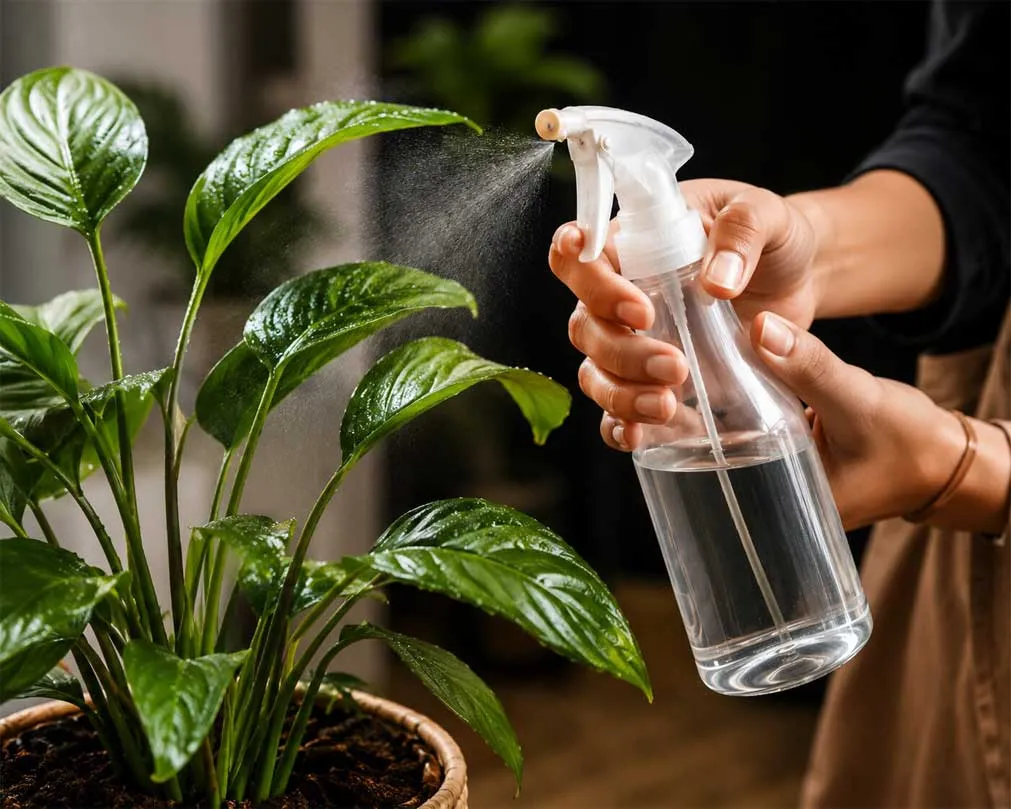
Some indoor plants enjoy light misting, but not all plants need it. Too much moisture on leaves can sometimes cause fungal issues.
Instead of frequent misting, clean leaves gently with a soft damp cloth. This helps plants absorb light better and keeps them looking fresh.
Plants show signs when something is wrong. After watering, observe the leaves, stems, and soil condition.
If leaves are turning yellow, drooping, or becoming brown at the edges, the watering routine may need adjustment.
Regular observation helps you understand what your plant needs.
Here is a general watering guide:
- Snake Plant: Every 2–3 weeks
- ZZ Plant: Every 2–3 weeks
- Money Plant: Once a week or when soil is dry
- Peace Lily: 1–2 times a week depending on soil moisture
- Areca Palm: 1–2 times a week
- Succulents: Every 2–4 weeks
Note: This schedule can change based on room temperature, sunlight, pot size, and season.
Watering indoor plants is simple when you understand the basics. Always check the soil, avoid overwatering, use pots with drainage, and adjust watering based on the plant type and season.
With the right watering routine, your indoor plants will stay healthy, green, and beautiful for a long time.
If you want indoor greenery without worrying about watering, maintenance, pruning, or plant replacement, professional indoor plant rental and maintenance services are the perfect solution.